Showing posts with label critical thinking. Show all posts

Monday, July 25, 2016

The Green Book

A great 99% Invisible Podcast
From the 1940s to the mid 60s, the classic American road trip could be a minefield of embarrassment and even danger for african americans daring to use the wrong bathroom, or wanting to be served in a whites only restaurant. This short 99% Invisible podcast shares stories from the time. It makes real the mundane evil of everyday racism. Here's an assignment page with a few discussion questions to support it: https://goo.gl/XHsLXa 

http://99percentinvisible.org/episode/the-green-book/


Saturday, October 31, 2015

Ekphrasis - close reading, interpreting and responding to works of art

In an excellent article from the National Council of Teachers of English: Speak Out! How Ekphrasis Inspires Writing on the Edge authors Sirpa Grierson and Sarah Orme introduced me to the idea of "ekphrasis". 

With “ekphrasis” we combine the two Greek words “ek” meaning “out of” and phrasis meaning “speak”. When we practice the technique of ekphrasis we respond in a very structured way to a work of art with both analysis and creativity. 

Grierson and Orme focus their students on responding to works of art through poetry. Building on this, I think short narratives and dialogue would also be interesting forms for students to explore as they demonstrate their observation and interpretation skills. A great opportunity to use media to teach word choice, extending understanding and critical literacy.

Google's Art Project with it's super high resolution images is a tremendous source for this sort of work.

This doc outlines the task and provides students with an organizer for their ekphrasis work: "Ekphrasis Poetry and Narrative from Works of Art"

+ bonus item ekphrasis poetry task from the Smithsonian Education group

Tuesday, September 22, 2015

Canada: The Greater Britain

Screen Shot 2015-08-13 at 10.28.27 AM.png
This is an authentic lecture from 1897 by Rev. C.E. Perry. Perry shares his views on all of the many things that make a young 30 year old Canada great. I wonder if students could see some of the irony in the text and whether they could infer how Perry might feel about our nation today? This activity feels timely in the middle of an election campaign.
Canada: The Greater Britain - full text with analysis prompts

Saturday, June 6, 2015

Learning & Studying Tips

Exams are around the corner.  This article ("The Lessons You Never Got Taught In School") offers students some suggestions on how to take control of their studying success.

Best Tip: Students preparing for exams should use the "Elaborative Interrogation" method

From the article:

Elaborative Interrogation

A method involving creating explanations for why stated facts are true. The method involves concentrating on why questions rather than what questions and creating questions for yourself as you are working through a task. To do this yourself, after reading a few paragraphs of text ask yourself to explain “why does x = y?” and use your answers to form your notes. This is a good method because it is simple, so anyone can apply it easily. It does however require enough prior knowledge to enable you to generate good questions for yourself, so this method may be best for learners with experience in a subject. The technique is particularly efficient with regard to time, one study found that elaborative learning took 32 mins as opposed to 28 mins simply reading.
An example of elaborative interrogation for the above paragraph could be:
Elaborative learning is useful for proficient learners because it allows them to apply their prior knowledge effectively to process new information. It is rated as effective because it is time efficient and relatively easy to perform.

Thursday, June 4, 2015

Book Clubs with Purpose

Literature Circles with defined roles can be a useful structure to support students' understanding of the sorts of thinking that effective readers do while reading... but they can also become very formulaic and at their worst devolve into a "taking up of homework" experience as students sequentially share their work with little investment or discussion.

A Book Club approach with an open challenge to  students to demonstrate their understanding  of their text and analysis skills removes the rigid structure of the roles from the Literature Circle and can lead to more adult and interesting discussions by students, but without some focus the Book Club may stall as students may require prompting to move the discussion forward. I like this format and enjoy sitting in with students taking part in Book Clubs (or Novel Seminars) and providing the occasional nudge. I find these are rich assessment opportunities, and that the students enjoy the freedom and take up the challenge.

Lately, I've found I can give the discussions a boost -- particularly with students who are already familiar with the format, by adding a pre-meeting task to the process. By giving the group a short article or image to consider immediately prior to the Book Club / Novel Seminar meeting I can spark additional analysis and challenge the group to extend their understanding of their text further. I find this is particularly useful when a group is meeting for the second or third time as they work through their text.

This article by Hannah Gersen from The Millions website ("Thinking By A Novelist About Writing")is an example of the sort of text I like to use prime the discussion pump in an effort to deepen the Book Club discussion. I've added a few prompts at the end to frame the conversation...but I would expect the group to engage in a conversation not read prepared answers at one another.

Other articles with Book Club discussion prompts:  Novel Discussion Group Articles

Monday, June 1, 2015

Inference - Using Prior Knowldge

Coming up on exam time... students often have to tackle a sight passage. Learning to infer and use their prior knowledge effectively while reading is critical to success with an unfamiliar text. This Google Ad is a fun inference puzzle to give those inference muscles a bit of a workout.

Challenge students to build a list of everything they know or think they know about the couple in the video and the clues in the video that they used to better understand the story being told. Students could work in pairs to complete a table like this:


Next, I'd want them to Identify specific moments in the video that required them to have some prior knowledge in order to better understand the story being told through the searches. I'd ask them to explain how their prior knowledge helped them.

Here's a student worksheet that also includes connections to the classic short story "A Conversation" by Ned Guymon: Inference Worksheet.

Thursday, May 28, 2015

10 Ideas To Get Your Class Outdoors


  1. Think Walk - pose a “big idea” question for students to consider while you lead them on a 10 minute walk. 10 minutes of movement and a change of context will lead to a richer discussion and better retention. After the walk ask the students to work in triads to develop a common answer to the initial question to share with the class.
  2. Observation Challenge - lead students on a 10 minute walk outside. Notice 5-10 details while you walk. Challenge the students to pay attention to their surrounding while they walk. When you return to class pose questions based on the details observed during the walk (e.g. “How many people were sitting on the grass by the track?” / “What colour was the car parked beside the door we exited?” / “What kinds of flowers were growing in the garden we walked past?”) -- Useful activity for poetry study or narrative writing.
  3. Inside Circle / Outside Circle - move the class outside and form two concentric standing circles. The members of the inner circle face the members of the outer circle. Provide a big idea prompt to the inner circle students (e.g. - “justify your choice for the most interesting text we’ve read in class this year” / “explain which character from a text you’ve read this year would be the most interesting to meet” / “explain why a sequel should be developed for one of the texts that we’ve read this year”). Rotate the outer circle two places and repeat with the member of the outer circle speaking. Repeat a few times. Great review or consolidation activity. Alternative context helps with retention. Standing promotes focus.
  4. Character Walk - ask the students to choose one of the characters from a text they’re reading. Lead students on a short walk. Challenge the students to walk in trios and to adopt the traits of their chosen character and to have a conversation in character while they walk. Give the trios a minute to brainstorm a topic for their conversation before you leave. When you return ask the students to report on how they used word choice, body language and specific ideas to bring their characters to life.
  5. Context Circle - move the class outdoors for a circle on the grass. Set the context for the lesson or activate students' prior knowledge with a prompt (e.g. - what’s something you already know about…”). The alternate context and circle can improve focus and give all students a voice.
  6. Writing Instructions / Procedures - select a few specific destinations on the school grounds. In small groups challenge the students to develop very specific language to direct a person to their assigned destination -- with the one complication that they can only direct movement not describe the destination (e.g. - “Walk to the west end of the hallway and turn left…” NOT “If you’re standing under the goal posts you’re in the right place”). Have the groups trade instructions and see if they can successfully follow the other group's instructions.
  7. Artifact Circle - ask students to bring artifacts from home (nothing valuable) that connect to a text that has been studied in class this year. Sitting on the grass in small circles of 6-8 ask the students to pass around the artifacts and make connections to the texts read in class. The student who provided the artifact goes last to explain the connection he/she intended the artifact to represent. Challenge the students to extend their understanding by making deeper connections to their texts and speculating how characters in their texts might participate in this experience.
  8. Photo Hunt - lead students on a walk. During the walk, challenge the students to find or stage a photo that connects to a text that you’ve read / viewed in class. When you return to class jigsaw the class and have students share / explain their images.
  9. Exam Prediction Brainstorm - lead the students on a walk. While walking ask the students to brainstorm a question that “should” appear on the final exam about one of the texts being studied in class. Prior to the walk co-create the criteria that you would use to describe an appropriate exam question. After the walk jigsaw a sharing of the questions.
  10. Be Miserable - on a lousy weather day take students outside (briefly?). When you return to class ask the students to individually write a reflection or hold a whole class circle discussion about how the weather affects them. Make connections to the use of setting in a text or brainstorm ideas of how to overcome negative feelings about the weather and discuss how these strategies could have been used by a character in a text studied in class.

Sunday, May 10, 2015

Photos of Playgrounds - Inference / Research / Critical Thinking Activities

These and more stunning photos of school playgrounds from around the world can be found here: Jamesmollison.com. Additional background on the project by photographer James Mollison and his book, Playgrounds can found found in this post by Slate.com  photo blogger Jordan G. Teicher: Slate Photo Blog interview.

Affiliated Primary School of South China Normal University, Guangzhou, China

Aida Boys School, Bethlehem, West Bank

The images are a great opportunity for students to apply their inference, research or critical thinking skills.  A few ideas:

  1. Inference: examine the details of one of the images closely. What could you infer from specific elements in the photograph about the school and home lives of the students pictured?  Here's an assignment page for this activity: A Day in the Life.
  2. Research: choose one of the images to focus on and research the daily life of the life of a student in the community presented in the photo. Here's an assignment page for this activity.
  3. Critical Thinking: imagine a character from one of the texts we've studied in class emigrated to one of the communities pictured in the collection of school playgrounds. Making specific references to details in the photograph and details in the text determine how challenging or comforting the character might find his/her new community? Here's an assignment page for this activity.

Saturday, May 2, 2015

Critical Literacy - Rethinking What We Know

Globe and Mail writer, Doug Saunder’s article “The real reasons why migrants risk everything for a new life elsewhere” is a great challenging read for senior students. It addresses stereotypes, requires critical thinking about the voices not heard in most news reporting and encourages further curiosity and research.

I find students respond really well to ideas that challenge conventional wisdom. This article encourages its readers to rethink what they “know” about migrants from African nations trying to reach Europe.  This Google Docs version of the article includes some response / analysis prompts: close reading task.


Sunday, February 22, 2015

The New World of Citizen Journalism

I had the opportunity to visit Mohawk College's Journalism program recently. It's very impressive.  I learned that the job of "reporter" has changed dramatically in the last 5-10 years. A reporter for a newspaper is no-longer primarily a writer. A reporter is expected to be a one person multimedia producing, cross-platform writing,  social networker. It's very exciting and the students at Mohawk were learning every aspect of the business. Which leads me, funnily enough, to the debate over vaccines. 

On  February 5th, The Toronto Star's front page cried out, "A Wonder Drug's Dark Side". What followed was a long story that as The Star's publisher was subsequently forced to admit, "led many readers to conclude The Star believed its investigation had uncovered a direct connection between a large variety of ailments and the vaccine". That quote is from the disclaimer that now appears on The Star's website where the article used to be found. The Star has "unpublished" the original story.

The flaws in the original story were laid out in an LA Times report on the controversy: "How A Major Newspaper Bungled A Vaccine Story and Then Smeared Its Critics".


In Our Classes

From an English class point of view this is rich material. 

  1. What a great opportunity to discuss research and bias. This blog post by Dr. Jen Gunter -Autopsy of Toronto Star HPV article and the real dark side of Gardasil they missed -is a terrific example of a persuasive research based essay. It's a masterful example of effective organization and word choice. I especially like her title and its invitation to readers to discover the "real dark side".
  2. The controversy is a terrific opportunity for students to examine the specific curriculum expectations of "critical literacy" and "production perspectives". Gunter's blog post highlights the need for readers to consider motivation and conflicts of interest when reading. This idea for a "Two Sides to the Story?" - research assignment uses the issue of "false balance" to teach the curriculum expectations of critical literacy and production perspectives.
  3. Finally, back to the students at Mohawk College. This story is a fascinating example of the shift in power caused by the Internet. 10 years ago the front page story written by The Star's professional journalists might have been challenged by a few letters to the editor, perhaps The Star would have chosen to publish this rebuttal - "Science shows HPV vaccine has no dark side" -by Canadian scientists. But the debate would have happened entirely within the newspaper and would have been controlled by the newspaper.  As the publisher's very defensive retraction proves, The Star does not back down easily. Today, the Internet provides a platform that democratizes voices. This story is a great opportunity to challenge students to consider these curriculum based issues:
    1. Confirmation bias;
    2. How to corroborate sources;
    3. Why we site sources in our research;
    4. Language usage - is Dr. Gunter's critique of the language used in The Star's retraction fair?
    5. "False Balance" in news reporting (as comically represented by John Oliver as it relates to Climate Change - warning PG-13 for language - start at 1:08 to avoid profanity).


Sunday, February 1, 2015

Goal Setting - "15 High Performance Habits"

We're past the "New Year's Resolution" time of the year, but isn't a new semester an equally appropriate time to offer students a chance to "reboot" their approach to school?  This article and activity is intended to foster those conversations:

Lesson Plan Idea & Article


"A New Semester - How Will You Make It Your Best One Ever?" -  http://goo.gl/HVqCtP the activity asks the students to read and reflect on the article:  "15 High Performance Habits That Will Make You Successful" - from Lifehack.org. 

Tuesday, January 13, 2015

PuppySwap – The Puppy Subscription Service


This clever video is a great example of "selling the problem" -- and it's horrifying.  People are abandoning dogs as puppies outgrow their cute stage and become a nuisance... so let's create "PuppySwap".  The viewer is left to wonder where is the man taking the older dog?  What's going to happen to the dog?


This could lead to some great critical thinking.  Possible prompts:

1. At some point did you start to doubt the authenticity of the ad?

2. Why do we consider the idea for this service to be morally unacceptable? Do dogs have rights?

3. How big a problem is pet abandonment? How could we find accurate information about this issue?


It might be mean, but I'd be inclined to pause the video just before the title comes up at the end and ask the students to react and comment prior to revealing the true purpose of the ad.

Thursday, January 8, 2015

Character Analysis - Introvert Island

Gemma Correll's The Introvert's Heart
Novel discussion groups can become formulaic without the injection of new material to spark interesting debate. This terrific graphic by Gemma Correll provides excellent fodder for character analysis. Use the graphic as a standalone discussion starter or consider using it alongside Susan Cain's excellent TED Talk "The Power of Introverts".
This assignment page could be used as a follow-up task:  Character Analysis - The Power of Introverts


Sunday, January 4, 2015

Getting Lost: "The Last Days of Peter Bergmann"

What does it mean to get lost in our social media saturated, closed circuit tv monitored, and Googlable world? This poor man, whose name wasn't really Peter Bergmann, decided to lose himself in a small Irish town. His final days are documented in this haunting short film:


The Last Days of Peter Bergmann Trailer from Fastnet Films on Vimeo.

The full 19 minute long film can be watcher here at Aeon Video: The Last Days of Peter Bergmann.
The film explores how unsettling we find the idea of a lack of identify, and deliberate efforts of a man to leave this world anonymously. Randall Sullivan's article from WIRED tells the fascinating story of a modern bounty hunter: "The World's Best Bounty Hunter is 4'11" - Here's How She Hunts" -- in it we follow the hunt for criminals trying desperately to stay off the grid and out of prison. These are people who would love to gain the anonymity of Peter Bergmann. Contrast these present day stories with the heartbreaking documentary "No Place on Earth" and the efforts of a group of Ukrainian Jews fleeting nazi troops and disappearing into a cave for over a year.


NO PLACE ON EARTH TRAILER YOUTUBE 5D from Janet Tobias on Vimeo.

Each of these texts examines how deeply rooted in our societies we are and how difficult it is for individuals to vanish.

Additional resources:  Interview with Ciaran Cassidy (writer/director of "The Last Days of Peter Bergmann")

MTV's Teen Mom Is Good For You?

Few things push my moral outrage button harder than Keeping Up With the Kardashians or The Bachelor or 16 and Pregnant. It's so satisfying to pontificate about these exploitive messes, while quite enjoying other reality tv programs such as Dirty Jobs or Ace of Cakes.
Now I'm faced with this article from the Aspen Journal of Ideas that declares that Teen Mom and 16 and Pregnant have been causally linked to declines in teen pregnancies in the US. Should educators be showing episodes of Teen Moms in health classes?

This assignment tasks students with reading the Teen Moms article and to think about the history of reality tv programs and also to consider how they celebrate / exploit the skills and behaviours of their stars.

Another useful Reality TV reference:
Tiki-Toki - Timeline of Reality TV

Tuesday, December 16, 2014

The Strange & Curious Tale of The Last True Hermit

Michael Finkel's story in GQ The Strange & Curious Tale of the Last True Hermit is a great read. Finkel tells the story of Christopher Knight - a recluse who managed to craft a life of isolation living in the woods of Maine for nearly thirty years. Knight opens up to Finkel -- to a point and reveals a complicated set of interests and tastes. Knight describes his difficulty returning to society and his experience in prison, "I am retreating into silence as a defensive move," he wrote. Soon he was down to uttering just five words, and only to guards: yes; no; please; thank you. "I am surprised by the amount of respect this garners me. That silence intimidates, puzzles me. Silence is to me normal, comfortable".
The article connects with Into the Wild, Catcher in the Rye, To Kill A Mockingbird, Lord of the Flies, Glass Castle and any other text about escape, independence, mental illness or isolation.
Here's a version of the article with a few study questions added at the end:  The Strange & Curious Tale of the Last True Hermit.

Thursday, November 27, 2014

Fixed vs Growth Mindsets

From: http://usergeneratededucation.wordpress.com/2014/11/26/growth-mindset-gobrain-and-making-a-splash/ 

Sunday, November 16, 2014

Unintended Consequences

The European Space Agency landed a robot on a comet only 4 km in diameter after a 10 year journey covering 6.4 billion kilometers. It’s like shooting a bullet in Toronto to land on a balloon in Tokyo. Magic. 

Sadly, at the press conference to discuss the landing of the spacecraft, the lead scientist made a wardrobe choice that distracted much of the Internet's attention away from his team’s accomplishments.  Mika McKinnon has written a very thoughtful, clever personal essay about the issue:  Thanks To That Shirt, We May Get a Shirt Celebrating Women In Science.

Unintended Consequences Assignment: McKinnon's essay is a great opportunity to examine the idea of unintended consequences. This assignment challenges students to read and understand her text and to consider how she maintained a wonderful balance of anger, frustration, humour and purpose in her word choice and ideas to create just the right voice for her text.

Beyond that, students could explore other examples of unintended consequences and create their own blog entries detailing cautionary tales telling the story of a small decision that led to unexpected consequences with interesting links for further exploration.

Saturday, October 4, 2014

Our Man in Tehran vs Argo


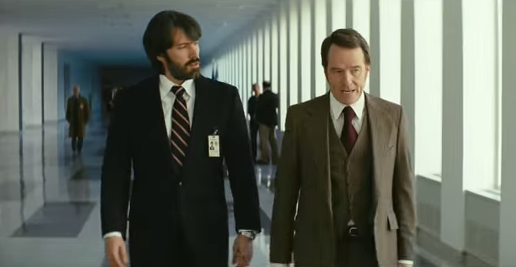
Screen Shot 2014-10-04 at 9.24.39 PM.pngThe films "Our Man in Tehran" and "Argo" both tell the story behind the smuggling of six American diplomats out of Iran in 1980.  One is a documentary that was featured at the Toronto International Film Festival and played on pay television, the other was also featured at the Toronto International Film Festival and went on to win the Academy awards for Best Picture, Adapted Screenplay and editing.
It would be great to read the books these films are based and watch the resulting films with students and analyze the choices the filmmakers made in adapting them, but that would require a significant time investment... instead we could accomplish many of the same curriculum outcomes with the study of the trailers for the two films.  


For close reading, Slate article about the accuracy of "Argo": "How Accurate is Argo?"

Some key questions we could consider with students:

  1. Referring to specific details in the two trailers thoughtfully explain how the fictional version of the story (Argo) differs from the documentary version of the story (Our Man in Tehran).
  2. How might a Canadian audience respond differently from an American audience when watching these two versions of the events in Tehran? Refer to specific details in how the films are being promoted that you think might be perceived differently from the points of view of Canadians and Americans.
  3. The film Argo was a huge financial success. Identify the elements apparent in the trailer that you believe may have contributed to the film’s popularity?
  4. Why do you think documentary films are rarely presented at the local Cineplex?
And finally...

One of the most commercially successful documentaries was Bowling for Columbine.  It earned nearly $21 million.  Watch the trailer for it and explain why you think it was more popular than Our Man in Tehran.


Saturday, September 6, 2014

Media Literacy: Evolution of a Web Post

There's a beautiful room in the British Museum that once upon a time contained the library of King George III. But, of course, owning a book is not the same thing as reading a book. King George III was no wiser for owning all of these texts.
I think there's some parallel to how we use information on the web today. Retweeting, "liking", "pinning" or re-blogging about an idea do not necessarily indicate an understanding of an idea.

For example:  I just posted a list of seven ways to promote student engagement in our classrooms. I discovered the list on a blog entry on Edutopia.com. Edutopia sourced the list from a blog entry by Stacy Hurst on ReadingHorizons.com.  Stacy Hurst references four texts in her blog.

What I find interesting, is that each of the repostings deleted information. The original article explains the importance of student engagement and provides ideas on tracking it in the classroom. Edutopia omitted that aspect of the original post and highlighted the inclusion of an infographic listing of the tips. My reposting further edited the information down to just the list of tips -- assuming that the value of these ideas was self-evident. I omitted the infographic that Edutopia highlighted (I think it's an example of an infographic that doesn't add value -- I don't learn or understand the content any better by viewing it in graphical form as opposed to the original list). A reader's understanding of the list of tips could vary considerably depending on where he/she encountered them, and the reader's interest in pursuing the ideas to their source.

Media Issue:

All media texts are the result of choices made by publishers.  Challenge your students to find an article on the web that they're interested in and map the trail of its sources and any other postings it spawned. Ask the students to consider how details included or omitted and how different readers could have different understandings of the topic depending on how determinedly they pursued the details of the story. The story of the depiction of the topic might make an interesting infographic or concept map.

Featured Post

Critical literacy lesson:

Poor Journalism: " Rise of women teachers 'turning boys off education' as report reveals girls born this year will be 75%...