
Showing posts with label Writing Prompt. Show all posts
Showing posts with label Writing Prompt. Show all posts
Monday, July 25, 2016
Quick Write Idea:

Friday, August 28, 2015
Fitting In and Finding Your Way...
Young Canadian singer songwriter Aleesia Cara is a poet. Her first song "Here" is a wonderful sarcastic apology to the popular crowd for not fitting in at a party:
"I'm sorry if I seem uninterested
Or I'm not listenin', or I'm indifferent
Truly I ain't got no business here
But since my friends are here, I just came to kick it
But really I would rather be at home all by myself"
I think it's a great prompt for discussion groups to consider (full lyrics) and / or a prompt for a quick write as we get to know our students early in the school year.
Prompts:
1. How much do you connect with Aleesia Cara's feelings in her song "Here"?
or
2. If you were a friend of Alessia Cara's how might you respond to her after hearing her song "Here"?
Wild Things by Alessia Cara

Prompts:
- Identify a character from a text we’ve read in class and explain how he/she would respond to Alessia Cara’s song. Justify your analysis with specific references to the character’s actions and/or thoughts.
- A “lamentation” is a song about regret and loss while a “celebration” is a song about success and triumph. Explain which label you’d apply to Alessia Cara’s “Wild Things”.
- How is Alessia Cara’s “Wild Things” related to the classic children’s story “Where the Wild Things Are” by Maurice Sedak?
"I lose my balance on these eggshells you tell me to tread
I'd rather be a wild one instead
Don't wanna hang around the in crowd, the cool kids
I'm cool to me, cause they're not cooler than we are"
Thursday, August 13, 2015
Narrative Profile of Amaris Tyynismaa
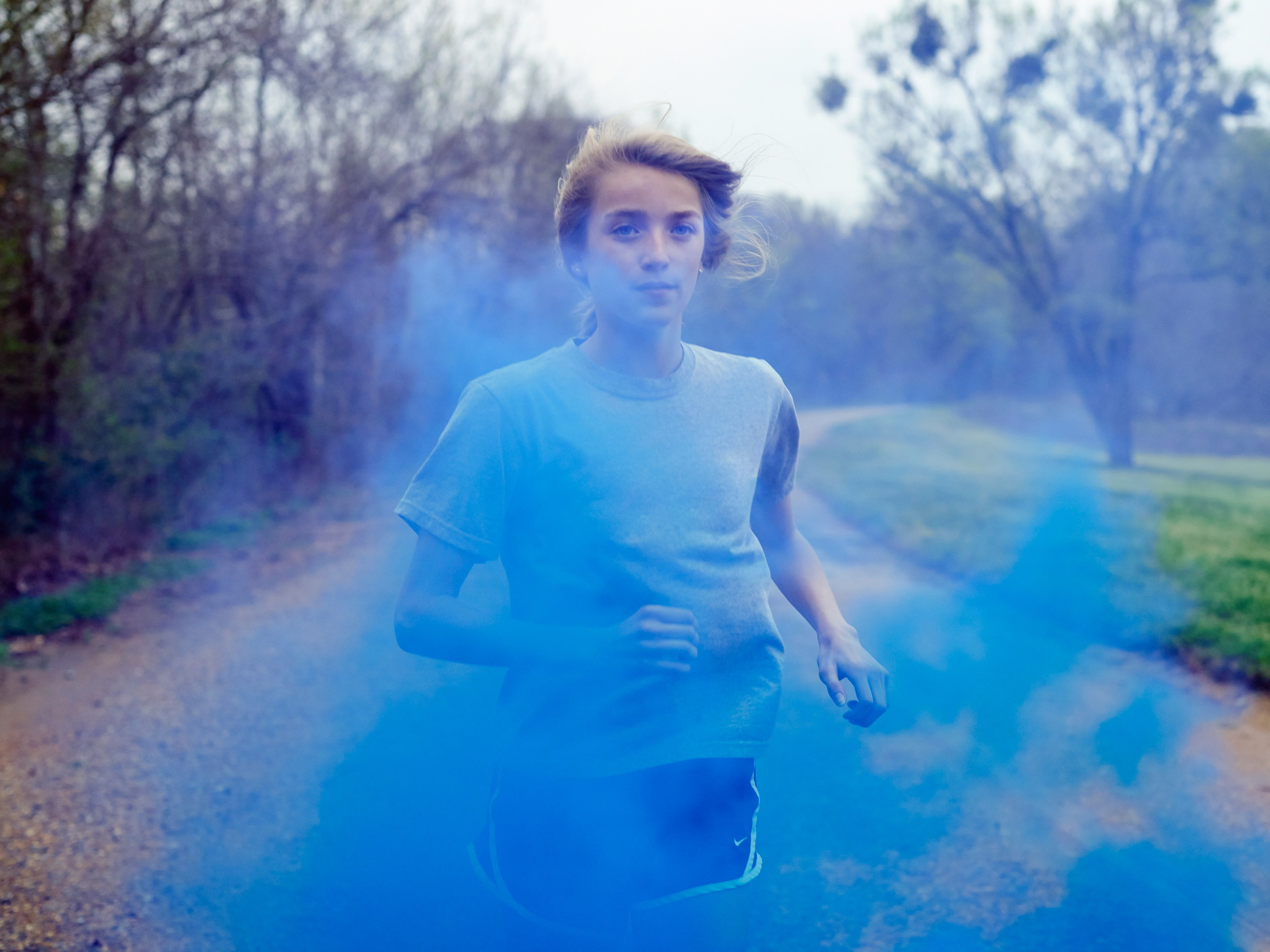 Amaris Tyynismaa has battled tourette's syndrome most of her life. Writer Duncan Murrell's profile of Amaris is a terrific example of the use of narrative to illustrate the qualities of a character.
"Amaris Tyynismaa: The Human Body is a Miracle. The Human Body is a Curse" by Duncan Murrell
Students might use the article as an example to follow when writing a brief profile of themselves.
1. Challenge the students to identify examples from the text when Murrell uses brief stories to illustrate key points about Amaris' personality or struggles.
2. Ask the students to consider how the use of the anecdotes make the story more interesting or convincing.
3. Challenge the students to share in small groups stories that illustrate something about themselves.
4. With just a partner follow up on the small group discussion with an interview focused on these ideas:
- Identify something important / interesting people should know about your partner;
- Discover an anecdote to illustrate the important / interesting thing;
- Conclude your profile connecting the idea and the anecdote
Classroom friendly version of the article: A Runner
Thursday, May 28, 2015
10 Ideas To Get Your Class Outdoors
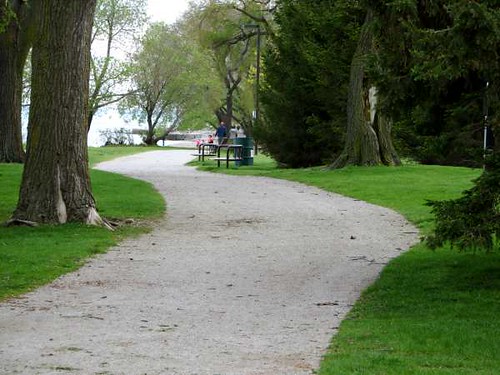
- Think Walk - pose a “big idea” question for students to consider while you lead them on a 10 minute walk. 10 minutes of movement and a change of context will lead to a richer discussion and better retention. After the walk ask the students to work in triads to develop a common answer to the initial question to share with the class.
- Observation Challenge - lead students on a 10 minute walk outside. Notice 5-10 details while you walk. Challenge the students to pay attention to their surrounding while they walk. When you return to class pose questions based on the details observed during the walk (e.g. “How many people were sitting on the grass by the track?” / “What colour was the car parked beside the door we exited?” / “What kinds of flowers were growing in the garden we walked past?”) -- Useful activity for poetry study or narrative writing.
- Inside Circle / Outside Circle - move the class outside and form two concentric standing circles. The members of the inner circle face the members of the outer circle. Provide a big idea prompt to the inner circle students (e.g. - “justify your choice for the most interesting text we’ve read in class this year” / “explain which character from a text you’ve read this year would be the most interesting to meet” / “explain why a sequel should be developed for one of the texts that we’ve read this year”). Rotate the outer circle two places and repeat with the member of the outer circle speaking. Repeat a few times. Great review or consolidation activity. Alternative context helps with retention. Standing promotes focus.
- Character Walk - ask the students to choose one of the characters from a text they’re reading. Lead students on a short walk. Challenge the students to walk in trios and to adopt the traits of their chosen character and to have a conversation in character while they walk. Give the trios a minute to brainstorm a topic for their conversation before you leave. When you return ask the students to report on how they used word choice, body language and specific ideas to bring their characters to life.
- Context Circle - move the class outdoors for a circle on the grass. Set the context for the lesson or activate students' prior knowledge with a prompt (e.g. - what’s something you already know about…”). The alternate context and circle can improve focus and give all students a voice.
- Writing Instructions / Procedures - select a few specific destinations on the school grounds. In small groups challenge the students to develop very specific language to direct a person to their assigned destination -- with the one complication that they can only direct movement not describe the destination (e.g. - “Walk to the west end of the hallway and turn left…” NOT “If you’re standing under the goal posts you’re in the right place”). Have the groups trade instructions and see if they can successfully follow the other group's instructions.
- Artifact Circle - ask students to bring artifacts from home (nothing valuable) that connect to a text that has been studied in class this year. Sitting on the grass in small circles of 6-8 ask the students to pass around the artifacts and make connections to the texts read in class. The student who provided the artifact goes last to explain the connection he/she intended the artifact to represent. Challenge the students to extend their understanding by making deeper connections to their texts and speculating how characters in their texts might participate in this experience.
- Photo Hunt - lead students on a walk. During the walk, challenge the students to find or stage a photo that connects to a text that you’ve read / viewed in class. When you return to class jigsaw the class and have students share / explain their images.
- Exam Prediction Brainstorm - lead the students on a walk. While walking ask the students to brainstorm a question that “should” appear on the final exam about one of the texts being studied in class. Prior to the walk co-create the criteria that you would use to describe an appropriate exam question. After the walk jigsaw a sharing of the questions.
- Be Miserable - on a lousy weather day take students outside (briefly?). When you return to class ask the students to individually write a reflection or hold a whole class circle discussion about how the weather affects them. Make connections to the use of setting in a text or brainstorm ideas of how to overcome negative feelings about the weather and discuss how these strategies could have been used by a character in a text studied in class.
Sunday, February 1, 2015
Goal Setting - "15 High Performance Habits"

We're past the "New Year's Resolution" time of the year, but isn't a new semester an equally appropriate time to offer students a chance to "reboot" their approach to school? This article and activity is intended to foster those conversations:
Lesson Plan Idea & Article
"A New Semester - How Will You Make It Your Best One Ever?" - http://goo.gl/HVqCtP the activity asks the students to read and reflect on the article: "15 High Performance Habits That Will Make You Successful" - from Lifehack.org.
Classroom Community Building & News Report Writing
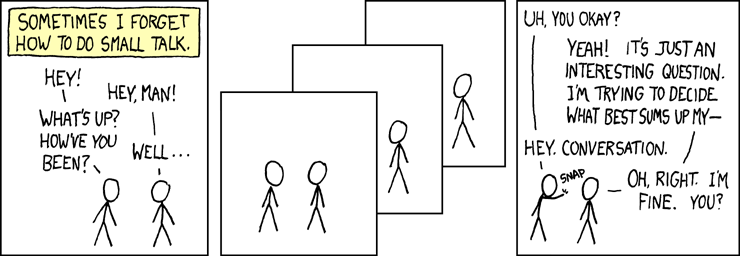
The start of a new semester is a time to think hard about the classroom communities we're building for our students. The following activity uses a list of 50 questions to get to know someone by Andrew Tarvin as an excuse to bring students together for conversations. I think it's fun, because not only do they have a chance to talk about themselves (generally an opportunity adolescents embrace) but also we can use the list to think about the kinds of questions that are appropriate in different situations.
Character Analysis
Later in the term, these questions can be revisited as we consider characters in texts and perhaps analyze how fully realized a fictional character is based on how well we could answer these questions about a character from a short story or novel.Small Talk & OSSLT Prep
Also, as an option for grade 9 / 10 classes, the task branches off into New Report writing as a prelude to instruction for the OSSLT.Lesson Plan & Worksheets
Class building focus: "Awkward Silences" activityOSSLT Focus: Building Classroom Community - Rapid Interviews / 50 Questions & News Writing Worksheet
This is interesting... - organizer
Tuesday, December 16, 2014
The Strange & Curious Tale of The Last True Hermit

The article connects with Into the Wild, Catcher in the Rye, To Kill A Mockingbird, Lord of the Flies, Glass Castle and any other text about escape, independence, mental illness or isolation.
Here's a version of the article with a few study questions added at the end: The Strange & Curious Tale of the Last True Hermit.
Sunday, December 7, 2014
Sarah Kay & Phil Kaye "An Origin Story"
A great story about friendship, a terrific performance and a fun two person poetry form. A poem as a point / counterpoint. Great model for students to try emulating.
Sunday, November 30, 2014
Wanderers - spectacular / poetic short film narrated by Carl Sagan
Wanderers
Erik Wernquist edited excerpts of Carl Sagan’s audio recording of his book, Pale Blue Dot to create the narration of his short film “Wanders”.
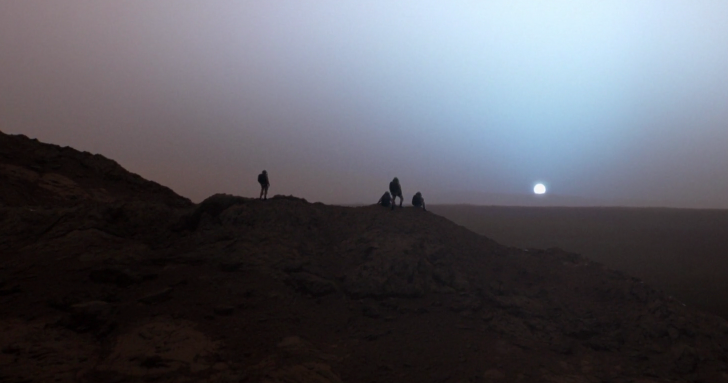
Using Carl Sagan's poetic musings on the forces that drive us to wander as his narration, Wernquist illustrates scientifically accurate worlds from our solar system and imagines how human occupants might work and play on these worlds. The result is spectacular.
Narration from “Wanders”
For all its material advantages, the sedentary life has left us edgy, unfulfilled. Even after 400 generations in villages and cities, we haven’t forgotten. The open road still softly calls, like a nearly forgotten song of childhood.We invest far-off places with a certain romance. This appeal, I suspect, has been meticulously crafted by natural selection as an essential element in our survival. Long summers, mild winters, rich harvests, plentiful game—none of them lasts forever.
It is beyond our powers to predict the future. Catastrophic events have a way of sneaking up on us, of catching us unaware. Your own life, or your band’s, or even your species’ might be owed to a restless few—drawn, by a craving they can hardly articulate or understand, to undiscovered lands and new worlds.
Herman Melville, in Moby Dick, spoke for wanderers in all epochs and meridians: “I am tormented with an everlasting itch for things remote. I love to sail forbidden seas …”
Maybe it’s a little early. Maybe the time is not quite yet. But those other worlds—promising untold opportunities—beckon.
Silently, they orbit the Sun, waiting.
Wanderers - a short film by Erik Wernquist from Erik Wernquist on Vimeo.
Possible Tasks / Lessons
Making Connections1. Review the images from "Wanderers" in the gallery (http://www.erikwernquist.com/wanderers/gallery.html). Explain which of the images best connect with the following terms: "wanderers" / "adventurers" / "colonists".
2. Read the narration for "Wanderers". Find earth based images to illustrate Carl Sagan's words. Find six images and justify how they connect to Sagan's ideas.
3. Bring to life one of the moments illustrated in the film. Using the text form of your choice (short story, news report, blog entry, narrative poem) tell the story of one of the adventures depicted in the film. Use a phrase from the film's narration as the title of your text.
Literary Elements
1. Carl Sagan was a scientist who wrote beautifully. Identify the most effective passage in text of his narration and explain how Sagan made use of figurative language to convey his ideas.
Media Literacy
1. Listen closely to Carl Sagan's performance of his text. Identify three moments in the recording that demonstrate effective speaking techniques. Explain why they are effective.
Sunday, November 16, 2014
Unintended Consequences

Sadly, at the press conference to discuss the landing of the spacecraft, the lead scientist made a wardrobe choice that distracted much of the Internet's attention away from his team’s accomplishments. Mika McKinnon has written a very thoughtful, clever personal essay about the issue: Thanks To That Shirt, We May Get a Shirt Celebrating Women In Science.
Unintended Consequences Assignment: McKinnon's essay is a great opportunity to examine the idea of unintended consequences. This assignment challenges students to read and understand her text and to consider how she maintained a wonderful balance of anger, frustration, humour and purpose in her word choice and ideas to create just the right voice for her text.
Beyond that, students could explore other examples of unintended consequences and create their own blog entries detailing cautionary tales telling the story of a small decision that led to unexpected consequences with interesting links for further exploration.
Monday, September 22, 2014
Fingerprint Words

In a Writer's Craft class, I think this article could be a great launching pad for some narrative writing.
Fingerprint Words from Slate.com
P.S. - Isn't J.X. Malady a great name for a fictional villain? Students could create a list of great character names and the "fingerprint words" that would define them.
Wednesday, March 19, 2014
Project Daniel - 3D Printing Arms for Children of War
Watch for the moment when Daniel feeds himself for the first time in a long long time. Powerful. Moving. Horrifying. Great launching point for research into war, disability, and/or development. Great connections to texts about struggle, determination or arrogance.
Sunday, February 9, 2014
Spencer O’Brien distraught over her 12th place finish in slopestyle
Spencer O'Brien's tearfully apologizes for her performance in the Olympic slopestyle event:
Questions:
Read more: http://www.ctvnews.ca/sochi/o-no-o-brien-finishes-last-in-women-s-slopestyle-final-1.1677700#ixzz2ssKh9ie9
 |
| From CTV.ca: Spencer O'Brien |
"Sorry I'm just really disappointed right now," she told reporters as tears rolled down her cheeks. "I had a really hard year coming back from some injuries. I was really happy to be riding the way I was here.
I was just really excited to be a part of Team Canada. Just after watching Mark yesterday, I was really inspired to just try really hard to bring home a medal.
"I went for my hardest run and it didn't work out today. So I'm really disappointed and really sad that I let Canada down."
Questions:
- How should a friend respond to Spencer O'Brien feelings about letting down her country?
- Do you feel that the members of Team Canada are competing on your behalf?
- Review some of the profiles of members of Team Canada on the Olympics.ca website or CBC.ca "The Olympians" website - how do the profiles try to create an emotional connection between the audience and the athletes. Refer to specific details in the articles or videos to demonstrate your analysis.
Read more: http://www.ctvnews.ca/sochi/o-no-o-brien-finishes-last-in-women-s-slopestyle-final-1.1677700#ixzz2ssKh9ie9
Tuesday, February 4, 2014
Snow day activity...

Let's not get our hopes up, but just in case...
An open ended inquiry challenge for students who brave the elements and make it to school:
Prompt: A few schools in Halton have had fire alarms go off this winter on really really cold days. Imagine you're the safety officer for the Halton District School Board. Research and develop a safety protocol for schools to follow on days with dangerously cold temperatures when a fire alarm goes off Convince the school board and the fire department that your plan is well thought out and will improve the safety of HDSB students.
Hints: Is it ever a good idea to get a coat rather than immediately evacuating?
What nearby shelters could students be directed to? At what point do cold temperatures become dangerous? Let the Googling begin...
Saturday, February 1, 2014
Canadian Identity - Promoting Toronto - Olympic Opening Ceremonies
 The Olympics are a great opportunity to think about point of view, national identity and culture, and the media texts that demonstrate these concepts.
 |
| Media Task |
This assignment is designed to challenge students to reflect on how countries have presented themselves at past Olympic games and to consider how they might promote Toronto during the Pan Am games next summer: Promoting Canada.
Wednesday, January 15, 2014
"Ta-pocketa-pocketa-pocketa"
Ben Stiller has published a recording of the classic Thurber story, "The Secret Life of Walter Mitty" to promote his feature film interpretation of the story. You can find the original short story here: pdf and the recording here: audio version
Students who've seen the movie might be interested in hearing the source material. The episodic nature of the story invites "fan fiction" versions. Students could try to capture Thurber's voice and write an additional scene.
Update: Google Forms Quiz comparing the film trailer and the short story - with embedded video.
Tuesday, June 4, 2013
Article: What To Do When Books Make You Cry on Public Transportation
A fun reflection prompt or a model for narrative essay...
What To Do When Books Make You Cry on Public Transportation

What To Do When Books Make You Cry on Public Transportation

Sunday, April 21, 2013
Writing Prompt
NASA Discovers Water World Planet
Water World on Space.com
Possible Prompt:
Imagine you're a teenaged blogger on this water world. Write a blog post that reveals something about your life, and your society. Engage your readers with your anecdotes of life on your watery world.Tuesday, February 5, 2013
Subscribe to:
Posts (Atom)
Featured Post
Critical literacy lesson:
Poor Journalism: " Rise of women teachers 'turning boys off education' as report reveals girls born this year will be 75%...
