YA fiction author Chris Vick set himself some interesting rules to follow when he was including controversial issues in his books directed at teen audiences. I wonder if parents and teens would agree on the rules. And I wonder if the books we use in class demonstrate the rules. Interesting questions for our students...
https://www.theguardian.com/childrens-books-site/2016/may/10/teenagers-controversial-issues-fiction-chris-vick?CMP=share_btn_gp
Showing posts with label Media. Show all posts
Monday, July 25, 2016
Critical literacy lesson:
"Rise of women teachers 'turning boys off education' as report reveals girls born this year will be 75% more likely to go to university"
This is a great example of really bad reporting. The article's headline reports as fact a claim that is revealed to be completely without merit in the body of the article. An equally accurate headline would have been "Lack of Three Stooges courses turning boys off university".Challenge students to research the issue and generate accurate claims about gender imbalances in education.
Original article: http://www.dailymail.co.uk/news/article-3586401/Rise-women-teachers-turning-boys-education-report-reveals-girls-born-year-75-likely-university.html?ITO=1490&ns_mchannel=rss&ns_campaign=1490
The Green Book
A great 99% Invisible Podcast
From the 1940s to the mid 60s, the classic American road trip could be a minefield of embarrassment and even danger for african americans daring to use the wrong bathroom, or wanting to be served in a whites only restaurant. This short 99% Invisible podcast shares stories from the time. It makes real the mundane evil of everyday racism. Here's an assignment page with a few discussion questions to support it: https://goo.gl/XHsLXa
http://99percentinvisible.org/episode/the-green-book/
Saturday, October 31, 2015
Ekphrasis - close reading, interpreting and responding to works of art
In an excellent article from the National Council of Teachers of English: Speak Out! How Ekphrasis Inspires Writing on the Edge authors Sirpa Grierson and Sarah Orme introduced me to the idea of "ekphrasis".
With “ekphrasis” we combine the two Greek words “ek” meaning “out of” and phrasis meaning “speak”. When we practice the technique of ekphrasis we respond in a very structured way to a work of art with both analysis and creativity.
Grierson and Orme focus their students on responding to works of art through poetry. Building on this, I think short narratives and dialogue would also be interesting forms for students to explore as they demonstrate their observation and interpretation skills. A great opportunity to use media to teach word choice, extending understanding and critical literacy.
Google's Art Project with it's super high resolution images is a tremendous source for this sort of work.
This doc outlines the task and provides students with an organizer for their ekphrasis work: "Ekphrasis Poetry and Narrative from Works of Art"
Friday, August 28, 2015
Fitting In and Finding Your Way...
Young Canadian singer songwriter Aleesia Cara is a poet. Her first song "Here" is a wonderful sarcastic apology to the popular crowd for not fitting in at a party:
"I'm sorry if I seem uninterested
Or I'm not listenin', or I'm indifferent
Truly I ain't got no business here
But since my friends are here, I just came to kick it
But really I would rather be at home all by myself"
I think it's a great prompt for discussion groups to consider (full lyrics) and / or a prompt for a quick write as we get to know our students early in the school year.
Prompts:
1. How much do you connect with Aleesia Cara's feelings in her song "Here"?
or
2. If you were a friend of Alessia Cara's how might you respond to her after hearing her song "Here"?
Wild Things by Alessia Cara
Cara's second released song "Wild Things" (full lyrics) builds on the theme with thoughts about high school cliques. It's a terrific call to arms, full of great word play and connections to Maurice Sedac's classic children's story.Prompts:
- Identify a character from a text we’ve read in class and explain how he/she would respond to Alessia Cara’s song. Justify your analysis with specific references to the character’s actions and/or thoughts.
- A “lamentation” is a song about regret and loss while a “celebration” is a song about success and triumph. Explain which label you’d apply to Alessia Cara’s “Wild Things”.
- How is Alessia Cara’s “Wild Things” related to the classic children’s story “Where the Wild Things Are” by Maurice Sedak?
"I lose my balance on these eggshells you tell me to tread
I'd rather be a wild one instead
Don't wanna hang around the in crowd, the cool kids
I'm cool to me, cause they're not cooler than we are"
Sunday, May 10, 2015
Photos of Playgrounds - Inference / Research / Critical Thinking Activities
| These and more stunning photos of school playgrounds from around the world can be found here: Jamesmollison.com. Additional background on the project by photographer James Mollison and his book, Playgrounds can found found in this post by Slate.com photo blogger Jordan G. Teicher: Slate Photo Blog interview. |
Affiliated Primary School of South China Normal University, Guangzhou, China |
Aida Boys School, Bethlehem, West Bank
The images are a great opportunity for students to apply their inference, research or critical thinking skills. A few ideas:
|
Saturday, April 18, 2015
Paper Towns - By John Green
I've read three of John Green's books now. Rather than worry that I have the literary tastes of an adolescent girl, I've decided that they're a connection to my daughter who's growing up so fast. They're also an insight into the hopes and dreams and fears of my adolescent students. In Paper Towns Green tells a terrific story that feels very real as his characters peel away layers of identity that they have applied to themselves and to their friends.
A. More Light Than Heat. I was really in love with that one for a long time. (Shakespeare)
Love Loves to Love Love. I thought that one was a hot slice of clever. (Joyce)
The Life and Hard Times of Margo Roth Spiegelman.
Chasing Margo. This ended up being the German title.
Margo Roth Spiegelman: An Incomplete Life
etc.
They were all more pretentious than Paper Towns. I come up with like 1,000 titles, and then Sarah and Julie laugh at me for my pretentiousness and we try to settle on the least pretentious title. I don’t know how I ever got The Fault in Our Stars past their pretention detectors.
Things I really liked about Paper Towns and why it belongs in English courses:
- There's a mystery. The plot works. The adventures feel genuine.
- There are great literary connections. Whitman's "Leaves of Grass" plays a central role in the novel. Holden Caufield doesn't appear, but an essay comparing him to central character Margo Ross Spiegelman is an obvious task. Canadians might draw contrasts to Hagar Shipley or even Susanna Moodie.
- John Green does so much work for teachers with his thoughtful FAQs. In discussing Paper Towns he provides rich content for book circles. He addresses the idea of the "Manic Pixie Dream Girl", his relationship as an author with his readers and the importance of ambiguity in novels, and other authorial tidbits like this one:
A. More Light Than Heat. I was really in love with that one for a long time. (Shakespeare)
Love Loves to Love Love. I thought that one was a hot slice of clever. (Joyce)
The Life and Hard Times of Margo Roth Spiegelman.
Chasing Margo. This ended up being the German title.
Margo Roth Spiegelman: An Incomplete Life
etc.
They were all more pretentious than Paper Towns. I come up with like 1,000 titles, and then Sarah and Julie laugh at me for my pretentiousness and we try to settle on the least pretentious title. I don’t know how I ever got The Fault in Our Stars past their pretention detectors.
- And lastly, there's a film coming out. That opens up all sorts of media analysis possibilities ranging from discussions of casting, to the changes in the plot, to responses to reviews, to analysis of the marketing.
Sunday, February 22, 2015
The New World of Citizen Journalism
I had the opportunity to visit Mohawk College's Journalism program recently. It's very impressive. I learned that the job of "reporter" has changed dramatically in the last 5-10 years. A reporter for a newspaper is no-longer primarily a writer. A reporter is expected to be a one person multimedia producing, cross-platform writing, social networker. It's very exciting and the students at Mohawk were learning every aspect of the business. Which leads me, funnily enough, to the debate over vaccines.
On February 5th, The Toronto Star's front page cried out, "A Wonder Drug's Dark Side". What followed was a long story that as The Star's publisher was subsequently forced to admit, "led many readers to conclude The Star believed its investigation had uncovered a direct connection between a large variety of ailments and the vaccine". That quote is from the disclaimer that now appears on The Star's website where the article used to be found. The Star has "unpublished" the original story.
The flaws in the original story were laid out in an LA Times report on the controversy: "How A Major Newspaper Bungled A Vaccine Story and Then Smeared Its Critics".
In Our Classes
From an English class point of view this is rich material.- What a great opportunity to discuss research and bias. This blog post by Dr. Jen Gunter -Autopsy of Toronto Star HPV article and the real dark side of Gardasil they missed -is a terrific example of a persuasive research based essay. It's a masterful example of effective organization and word choice. I especially like her title and its invitation to readers to discover the "real dark side".
- The controversy is a terrific opportunity for students to examine the specific curriculum expectations of "critical literacy" and "production perspectives". Gunter's blog post highlights the need for readers to consider motivation and conflicts of interest when reading. This idea for a "Two Sides to the Story?" - research assignment uses the issue of "false balance" to teach the curriculum expectations of critical literacy and production perspectives.
- Finally, back to the students at Mohawk College. This story is a fascinating example of the shift in power caused by the Internet. 10 years ago the front page story written by The Star's professional journalists might have been challenged by a few letters to the editor, perhaps The Star would have chosen to publish this rebuttal - "Science shows HPV vaccine has no dark side" -by Canadian scientists. But the debate would have happened entirely within the newspaper and would have been controlled by the newspaper. As the publisher's very defensive retraction proves, The Star does not back down easily. Today, the Internet provides a platform that democratizes voices. This story is a great opportunity to challenge students to consider these curriculum based issues:
- Confirmation bias;
- How to corroborate sources;
- Why we site sources in our research;
- Language usage - is Dr. Gunter's critique of the language used in The Star's retraction fair?
- "False Balance" in news reporting (as comically represented by John Oliver as it relates to Climate Change - warning PG-13 for language - start at 1:08 to avoid profanity).
Saturday, February 14, 2015
Stream of Consciousness on Racism in Canada
Watching an old movie with my daughter led me down a stream of consciousness about race and culture and prejudice that reminded me of some texts that could be useful in the teaching of character analysis or persuasive writing.
I was watching the old John Grisham film A Time To Kill with my daughter. In the film, newly minted Klu Klux Klan followers plant a burning cross on the lawn of a lawyer defending a black man. My daughter asked a very sensible question, that I'd never processed before, she wondered how a burning cross became a symbol for white power.
This led to a Google search which led to a Wikipedia article and the uncomfortable discovery that the most recent example of a racist cross burning mentioned in Wikipedia happened in Nova Scotia in 2010.
That story reminded me of a terrific Radio Lab podcast about a young woman who rejected her family's imposed identity (her mother's birth certificate listed her as "negro") and adopted a new identity for herself as a white woman in a high school full of racial tension.
And finally, that story reminded me of a pair of articles from last month about racism in Winnipeg.
None of these texts are particularly uplifting, but all challenge us to confront our stereotypes and prejudices.
As part of an examination of the depiction of character traits or an analysis of the inner conflicts faced by characters in short stories or novels I wonder if these stories / articles might provide some interesting fodder for discussion.
Ally's Choice - Radio Lab podcast about racial divides in a family. The Radio Lab podcast challenges the scientific validity of the concept of race.
These two articles consider the reality of prejudice and injustice in Canada towards First Nations people: Winnipeg the Most Racist City in Canada and a rebuttal, Is Our City the Most Racist In Canada?
These could also be useful as part of a study of persuasive writing. Students could consider the reporters' attempts to create a convincing arguments to support ideas.
Tuesday, January 13, 2015
PuppySwap – The Puppy Subscription Service
This clever video is a great example of "selling the problem" -- and it's horrifying. People are abandoning dogs as puppies outgrow their cute stage and become a nuisance... so let's create "PuppySwap". The viewer is left to wonder where is the man taking the older dog? What's going to happen to the dog?
This could lead to some great critical thinking. Possible prompts:
1. At some point did you start to doubt the authenticity of the ad?
2. Why do we consider the idea for this service to be morally unacceptable? Do dogs have rights?
3. How big a problem is pet abandonment? How could we find accurate information about this issue?
It might be mean, but I'd be inclined to pause the video just before the title comes up at the end and ask the students to react and comment prior to revealing the true purpose of the ad.
Sunday, January 4, 2015
Getting Lost: "The Last Days of Peter Bergmann"
What does it mean to get lost in our social media saturated, closed circuit tv monitored, and Googlable world? This poor man, whose name wasn't really Peter Bergmann, decided to lose himself in a small Irish town. His final days are documented in this haunting short film:
The Last Days of Peter Bergmann Trailer from Fastnet Films on Vimeo.
The full 19 minute long film can be watcher here at Aeon Video: The Last Days of Peter Bergmann.
The film explores how unsettling we find the idea of a lack of identify, and deliberate efforts of a man to leave this world anonymously. Randall Sullivan's article from WIRED tells the fascinating story of a modern bounty hunter: "The World's Best Bounty Hunter is 4'11" - Here's How She Hunts" -- in it we follow the hunt for criminals trying desperately to stay off the grid and out of prison. These are people who would love to gain the anonymity of Peter Bergmann. Contrast these present day stories with the heartbreaking documentary "No Place on Earth" and the efforts of a group of Ukrainian Jews fleeting nazi troops and disappearing into a cave for over a year.
NO PLACE ON EARTH TRAILER YOUTUBE 5D from Janet Tobias on Vimeo.
Each of these texts examines how deeply rooted in our societies we are and how difficult it is for individuals to vanish.
Additional resources: Interview with Ciaran Cassidy (writer/director of "The Last Days of Peter Bergmann")
MTV's Teen Mom Is Good For You?
Now I'm faced with this article from the Aspen Journal of Ideas that declares that Teen Mom and 16 and Pregnant have been causally linked to declines in teen pregnancies in the US. Should educators be showing episodes of Teen Moms in health classes?
This assignment tasks students with reading the Teen Moms article and to think about the history of reality tv programs and also to consider how they celebrate / exploit the skills and behaviours of their stars.
Another useful Reality TV reference:
![]() |
| Tiki-Toki - Timeline of Reality TV |
Sunday, November 30, 2014
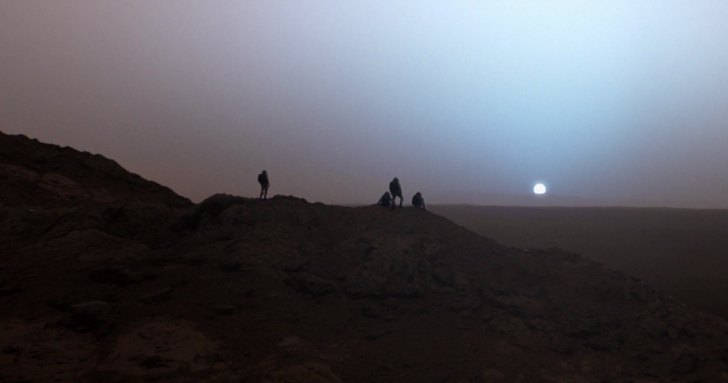
Wanderers - spectacular / poetic short film narrated by Carl Sagan
Wanderers
Erik Wernquist edited excerpts of Carl Sagan’s audio recording of his book, Pale Blue Dot to create the narration of his short film “Wanders”.
Using Carl Sagan's poetic musings on the forces that drive us to wander as his narration, Wernquist illustrates scientifically accurate worlds from our solar system and imagines how human occupants might work and play on these worlds. The result is spectacular.
Narration from “Wanders”
For all its material advantages, the sedentary life has left us edgy, unfulfilled. Even after 400 generations in villages and cities, we haven’t forgotten. The open road still softly calls, like a nearly forgotten song of childhood.We invest far-off places with a certain romance. This appeal, I suspect, has been meticulously crafted by natural selection as an essential element in our survival. Long summers, mild winters, rich harvests, plentiful game—none of them lasts forever.
It is beyond our powers to predict the future. Catastrophic events have a way of sneaking up on us, of catching us unaware. Your own life, or your band’s, or even your species’ might be owed to a restless few—drawn, by a craving they can hardly articulate or understand, to undiscovered lands and new worlds.
Herman Melville, in Moby Dick, spoke for wanderers in all epochs and meridians: “I am tormented with an everlasting itch for things remote. I love to sail forbidden seas …”
Maybe it’s a little early. Maybe the time is not quite yet. But those other worlds—promising untold opportunities—beckon.
Silently, they orbit the Sun, waiting.
Wanderers - a short film by Erik Wernquist from Erik Wernquist on Vimeo.
Possible Tasks / Lessons
Making Connections1. Review the images from "Wanderers" in the gallery (http://www.erikwernquist.com/wanderers/gallery.html). Explain which of the images best connect with the following terms: "wanderers" / "adventurers" / "colonists".
2. Read the narration for "Wanderers". Find earth based images to illustrate Carl Sagan's words. Find six images and justify how they connect to Sagan's ideas.
3. Bring to life one of the moments illustrated in the film. Using the text form of your choice (short story, news report, blog entry, narrative poem) tell the story of one of the adventures depicted in the film. Use a phrase from the film's narration as the title of your text.
Literary Elements
1. Carl Sagan was a scientist who wrote beautifully. Identify the most effective passage in text of his narration and explain how Sagan made use of figurative language to convey his ideas.
Media Literacy
1. Listen closely to Carl Sagan's performance of his text. Identify three moments in the recording that demonstrate effective speaking techniques. Explain why they are effective.
Sunday, November 16, 2014
Unintended Consequences
The European Space Agency landed a robot on a comet only 4 km in diameter after a 10 year journey covering 6.4 billion kilometers. It’s like shooting a bullet in Toronto to land on a balloon in Tokyo. Magic.
Sadly, at the press conference to discuss the landing of the spacecraft, the lead scientist made a wardrobe choice that distracted much of the Internet's attention away from his team’s accomplishments. Mika McKinnon has written a very thoughtful, clever personal essay about the issue: Thanks To That Shirt, We May Get a Shirt Celebrating Women In Science.
Unintended Consequences Assignment: McKinnon's essay is a great opportunity to examine the idea of unintended consequences. This assignment challenges students to read and understand her text and to consider how she maintained a wonderful balance of anger, frustration, humour and purpose in her word choice and ideas to create just the right voice for her text.
Beyond that, students could explore other examples of unintended consequences and create their own blog entries detailing cautionary tales telling the story of a small decision that led to unexpected consequences with interesting links for further exploration.
Saturday, October 25, 2014
Information vs Emotion in News Headlines
Much has been made in the last few days contrasting how the Canadian media reported on the shootings in Ottawa vs the coverage by the American media. These two articles do a particularly good job of describing the difference between reporting with an agenda of providing information and reporting focused on creating an emotional response:
Canada Just Showed the US the Exact Right Way to Cover a Shooting
To US media Canadian Shooter Being Muslim Ends Investigation

Thinking beyond how the media has covered violent sensational news to consider the underlying reasons for the decisions news reports and organizations make can be a great opportunity to provide instruction in inference, critical literacy and build a recognition of how the economics of the media influence the content of reporting. This assignment attempts to challenge students to think along these lines: Information vs Emotion in News Reporting.
Canada Just Showed the US the Exact Right Way to Cover a Shooting
To US media Canadian Shooter Being Muslim Ends Investigation
Thinking beyond how the media has covered violent sensational news to consider the underlying reasons for the decisions news reports and organizations make can be a great opportunity to provide instruction in inference, critical literacy and build a recognition of how the economics of the media influence the content of reporting. This assignment attempts to challenge students to think along these lines: Information vs Emotion in News Reporting.
Saturday, October 4, 2014
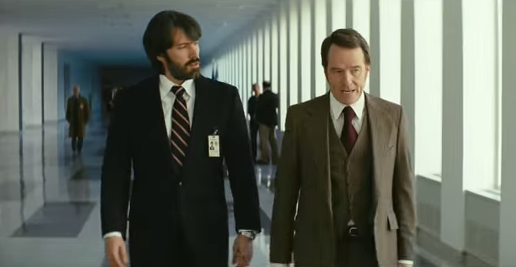
Our Man in Tehran vs Argo
It would be great to read the books these films are based and watch the resulting films with students and analyze the choices the filmmakers made in adapting them, but that would require a significant time investment... instead we could accomplish many of the same curriculum outcomes with the study of the trailers for the two films.
For close reading, Slate article about the accuracy of "Argo": "How Accurate is Argo?"
Some key questions we could consider with students:
- Referring to specific details in the two trailers thoughtfully explain how the fictional version of the story (Argo) differs from the documentary version of the story (Our Man in Tehran).
- How might a Canadian audience respond differently from an American audience when watching these two versions of the events in Tehran? Refer to specific details in how the films are being promoted that you think might be perceived differently from the points of view of Canadians and Americans.
- The film Argo was a huge financial success. Identify the elements apparent in the trailer that you believe may have contributed to the film’s popularity?
- Why do you think documentary films are rarely presented at the local Cineplex?
One of the most commercially successful documentaries was Bowling for Columbine. It earned nearly $21 million. Watch the trailer for it and explain why you think it was more popular than Our Man in Tehran.
Thursday, July 31, 2014
Emaze.com - web based presentations
Emaze is a very artfully designed web based presentation tool. It features a variety of stylish and original templates particularly for presentations that are designed to be shared individually and viewed on a computer rather than as a backdrop to a speech to a large group.
It also has tools to create very effective infographics.
As a starting point, you might as students to create a five or six slide autobiography as a way to introduce themselves to you and their classmates. They could post the links to their creations on a shared Google Doc for everyone to see.
The Emaze.com tools are free for a basic account.
Here's one I threw together quickly...
Wednesday, May 14, 2014
Soundtracks for books
This is clever: Booktrack.com. Whether using the website or not, creating a soundtrack for a chapter or sequence in a text and explaining / justifying your choice is an engaging way to demonstrate comprehension and an understanding of the author's purpose and audience.
Promotional video:
Promotional video:
Sunday, April 27, 2014
Storify.com -- a different way to tell a story
Here's the Storify.com page: https://storify.com/PhilDavison/memory-and-poetry?utm_source=embed_header
Thursday, March 6, 2014
"Hands down the best decision my parents ever forced me to make!"
This funny parody of University promotional videos provides a provocative challenge to the value of a degree.
"Evaluating the Worth of A University Degree" - Globe and Mail
"Why Google Doesn't Care About Hiring Top College Graduates"
A number of articles recently have added fuel to this issue. It might make a timely and relevant research task. Particularly when tied to some explorations using MyBluePrint.ca
"The value of education is dropping fast for university graduates" - Financial Post
"Evaluating the Worth of A University Degree" - Globe and Mail
"Why Google Doesn't Care About Hiring Top College Graduates"
Subscribe to:
Posts (Atom)
Featured Post
Critical literacy lesson:
Poor Journalism: " Rise of women teachers 'turning boys off education' as report reveals girls born this year will be 75%...