Showing posts with label Critical Literacy. Show all posts

Monday, July 25, 2016

What's Off Limits in YA Fiction?

YA fiction author Chris Vick set himself some interesting rules to follow when he was including controversial issues in his books directed at teen audiences. I wonder if parents and teens would agree on the rules. And I wonder if the books we use in class demonstrate the rules. Interesting questions for our students...

https://www.theguardian.com/childrens-books-site/2016/may/10/teenagers-controversial-issues-fiction-chris-vick?CMP=share_btn_gp

Critical literacy lesson:

Poor Journalism:

"Rise of women teachers 'turning boys off education' as report reveals girls born this year will be 75% more likely to go to university"

This is a great example of really bad reporting. The article's headline reports as fact a claim that is revealed to be completely without merit in the body of the article. An equally accurate headline would have been "Lack of Three Stooges courses turning boys off university".
Challenge students to research the issue and generate accurate claims about gender imbalances in education.
Original article: http://www.dailymail.co.uk/news/article-3586401/Rise-women-teachers-turning-boys-education-report-reveals-girls-born-year-75-likely-university.html?ITO=1490&ns_mchannel=rss&ns_campaign=1490

Tuesday, August 25, 2015

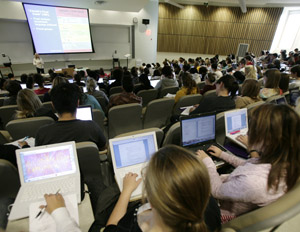
Effective Laptop Use in Classes

I think all of the following statements are probably true:

  • laptops can lead to off task behaviour in class / particularly during lectures;
  • laptops are great tools for taking notes during lectures;
  • laptops can lead to students transcribing lectures rather than summarizing / distilling the most important information;
  • laptops enable critical thinking, fact checking, making connections and exploring ideas during lectures;
  • the effective use of laptops in classrooms must be taught through modelling, discussion, and reflection.
These articles from the Globe and Mail and The Atlantic about technology use in university lectures might be useful starting points for a discussion in high school classes about the effective use of laptops for note taking:  "Professors at odds over technology’s role in the lecture hall" / "To Remember a Lecture Better, Take Notes by Hand"

Questions I'd want students to consider after reading the articles:


  1. How is effective note taking different from transcribing a lecture?
  2. How might laptops help or hinder effective note taking?
  3. What does effective laptop use look like in a class?
  4. Do high school teachers and university professors have different responsibilities in the regulation of laptop use in their classes?
  5. How will you know if you're an effective note taker?

Saturday, May 2, 2015

Critical Literacy - Rethinking What We Know

Globe and Mail writer, Doug Saunder’s article “The real reasons why migrants risk everything for a new life elsewhere” is a great challenging read for senior students. It addresses stereotypes, requires critical thinking about the voices not heard in most news reporting and encourages further curiosity and research.

I find students respond really well to ideas that challenge conventional wisdom. This article encourages its readers to rethink what they “know” about migrants from African nations trying to reach Europe.  This Google Docs version of the article includes some response / analysis prompts: close reading task.


Saturday, February 14, 2015

Stream of Consciousness on Racism in Canada

Watching an old movie with my daughter led me down a stream of consciousness about race and culture and prejudice that reminded me of some texts that could be useful in the teaching of character analysis or persuasive writing.
I was watching the old John Grisham film A Time To Kill with my daughter. In the film, newly minted Klu Klux Klan followers plant a burning cross on the lawn of a lawyer defending a black man. My daughter asked a very sensible question, that I'd never processed before, she wondered how a burning cross became a symbol for white power.

This led to a Google search which led to a Wikipedia article and the uncomfortable discovery that the most recent example of a racist cross burning mentioned in Wikipedia happened in Nova Scotia in 2010.

That story reminded me of a terrific Radio Lab podcast about a young woman who rejected her family's imposed identity (her mother's birth certificate listed her as "negro") and adopted a new identity for herself as a white woman in a high school full of racial tension.
And finally, that story reminded me of a pair of articles from last month about racism in Winnipeg.
None of these texts are particularly uplifting, but all challenge us to confront our stereotypes and prejudices.

As part of an examination of the depiction of character traits or an analysis of the inner conflicts faced by characters in short stories or novels I wonder if these stories / articles might provide some interesting fodder for discussion.

Ally's Choice - Radio Lab podcast about racial divides in a family. The Radio Lab podcast challenges the scientific validity of the concept of race.

These two articles consider the reality of prejudice and injustice in Canada towards First Nations people: Winnipeg the Most Racist City in Canada and a rebuttal, Is Our City the Most Racist In Canada?

These could also be useful as part of a study of persuasive writing. Students could consider the reporters' attempts to create a convincing arguments to support ideas.

Sunday, January 4, 2015

MTV's Teen Mom Is Good For You?

Few things push my moral outrage button harder than Keeping Up With the Kardashians or The Bachelor or 16 and Pregnant. It's so satisfying to pontificate about these exploitive messes, while quite enjoying other reality tv programs such as Dirty Jobs or Ace of Cakes.
Now I'm faced with this article from the Aspen Journal of Ideas that declares that Teen Mom and 16 and Pregnant have been causally linked to declines in teen pregnancies in the US. Should educators be showing episodes of Teen Moms in health classes?

This assignment tasks students with reading the Teen Moms article and to think about the history of reality tv programs and also to consider how they celebrate / exploit the skills and behaviours of their stars.

Another useful Reality TV reference:
Tiki-Toki - Timeline of Reality TV

Saturday, October 25, 2014

Information vs Emotion in News Headlines

Much has been made in the last few days contrasting how the Canadian media reported on the shootings in Ottawa vs the coverage by the American media.  These two articles do a particularly good job of describing the difference between reporting with an agenda of providing information and reporting focused on creating an emotional response:

Canada Just Showed the US the Exact Right Way to Cover a Shooting

To US media Canadian Shooter Being Muslim Ends Investigation

ZGVhYTQxMzE4YiMvWS0zYnZmWDlKV1V6NEFxU3JmeHhYSFg5MFg4PS8weDExOjk4MHg2MjkvODQweDUzMC9maWx0ZXJzOnF1YWxpdHkoNzApL2h0dHA6Ly9zMy5hbWF6b25hd3MuY29tL3BvbGljeW1pYy1pbWFnZXMvdTEyODZhMDdvaGNuc2JtNWpjN3kya2cyNDMwamlmOTg1dndzdDhwM2Y1bHdmeHV4OHl1ZzMyNnlreTZrZGM1NS5qcGc=.jpg

Thinking beyond how the media has covered violent sensational news to consider the underlying reasons for the decisions news reports and organizations make can be a great opportunity to provide instruction in inference, critical literacy and build a recognition of how the economics of the media influence the content of reporting. This assignment attempts to challenge students to think along these lines: Information vs Emotion in News Reporting.

Saturday, October 4, 2014

Our Man in Tehran vs Argo


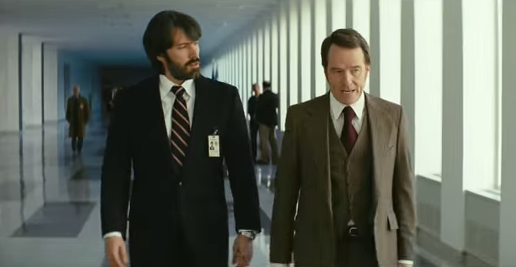
Screen Shot 2014-10-04 at 9.24.39 PM.pngThe films "Our Man in Tehran" and "Argo" both tell the story behind the smuggling of six American diplomats out of Iran in 1980.  One is a documentary that was featured at the Toronto International Film Festival and played on pay television, the other was also featured at the Toronto International Film Festival and went on to win the Academy awards for Best Picture, Adapted Screenplay and editing.
It would be great to read the books these films are based and watch the resulting films with students and analyze the choices the filmmakers made in adapting them, but that would require a significant time investment... instead we could accomplish many of the same curriculum outcomes with the study of the trailers for the two films.  


For close reading, Slate article about the accuracy of "Argo": "How Accurate is Argo?"

Some key questions we could consider with students:

  1. Referring to specific details in the two trailers thoughtfully explain how the fictional version of the story (Argo) differs from the documentary version of the story (Our Man in Tehran).
  2. How might a Canadian audience respond differently from an American audience when watching these two versions of the events in Tehran? Refer to specific details in how the films are being promoted that you think might be perceived differently from the points of view of Canadians and Americans.
  3. The film Argo was a huge financial success. Identify the elements apparent in the trailer that you believe may have contributed to the film’s popularity?
  4. Why do you think documentary films are rarely presented at the local Cineplex?
And finally...

One of the most commercially successful documentaries was Bowling for Columbine.  It earned nearly $21 million.  Watch the trailer for it and explain why you think it was more popular than Our Man in Tehran.


Sunday, April 27, 2014

"To This Day" TED Talk by Shane Koyczan

Spoken word poetry about bullying and self-image.  Strong language, stronger imagery, powerful message...


More at: http://www.shanekoyczan.com/

Wednesday, March 19, 2014

Project Daniel - 3D Printing Arms for Children of War


Watch for the moment when Daniel feeds himself for the first time in a long long time.  Powerful. Moving. Horrifying.  Great launching point for research into war, disability, and/or development. Great connections to texts about struggle, determination or arrogance.

Sunday, February 16, 2014

Close Reading, Allusion and Blissful Ignorance

The media depictions of Dunn and Davis can be very
interesting and revealing of point of view.
I had somehow remained ignorant of the story of the death of Jordan Davis until I saw this brief article by Ta-Nehisi Coates on The Atlantic's website: "On the Killing of Jordan Davis by Michael Dunn". Coates' first person response to the verdict in the trial of Davis' killer is powerful, poetic and was for me impenetrable -- until I did some research.  It's a great example of the power of allusion.

The more research I did the more I appreciated Coates' writing. 10 years ago I would have turned the page and moved on. This morning I started Googling.  Reading has changed.

This is a great resource for teaching our students persistence and close reading skills.

Overview of the case from The Christian Science Monitor website: "The Loud Music Murder Case"

Sunday, February 9, 2014

Spencer O’Brien distraught over her 12th place finish in slopestyle

Spencer O'Brien's tearfully apologizes for her performance in the Olympic slopestyle event:
From CTV.ca:  Spencer O'Brien

"Sorry I'm just really disappointed right now," she told reporters as tears rolled down her cheeks. "I had a really hard year coming back from some injuries. I was really happy to be riding the way I was here. 
I was just really excited to be a part of Team Canada. Just after watching Mark yesterday, I was really inspired to just try really hard to bring home a medal.
"I went for my hardest run and it didn't work out today. So I'm really disappointed and really sad that I let Canada down."

Questions:
  1. How should a friend respond to Spencer O'Brien feelings about letting down her country?  
  2. Do you feel that the members of Team Canada are competing on your behalf?
  3. Review some of the profiles of members of Team Canada on the Olympics.ca website or CBC.ca "The Olympians" website - how do the profiles try to create an emotional connection between the audience and the athletes. Refer to specific details in the articles or videos to demonstrate your analysis.

Read more: http://www.ctvnews.ca/sochi/o-no-o-brien-finishes-last-in-women-s-slopestyle-final-1.1677700#ixzz2ssKh9ie9

Friday, January 31, 2014

A Writer's Thoughts About Editors and Online Publishing

An interesting reflection on the relationship between an editor and a writer and how online publishing has changed the nature writing.

Great for a Writer's Craft or senior English class.

What The Longform Backlash Is All About — Medium

Sunday, January 26, 2014

Critical Literacy: Point / Counter Point

3 Myths That Block Progress for the Poor
Bill Gates annual report on the Gates Foundation -
2014 Gates Annual Letter: Myths About Foreign Aid - Gates Foundation is a great example of digital publishing techniques combining text, graphics and video.  It has also prompted discussions on Gate's predictions, particularly from Joshua Keating at Slate.com:  "Incomes in Africa Have Barely Budged for the Last 15 Years"

Students could read and evaluate Gate's claims and evaluate Keating's criticisms.  Excellent opportunity for rich discussions and further research.


Wednesday, August 14, 2013

Radiolab Podcast - Ally's Choice

This Radiolab podcast is about two sisters divided by racism. One chooses to pass as white, the other chooses to identify herself as black. Neither seems very happy.

Radiolab podcast - Ally's Choice

Ally's Choice handout: google doc

Podcasting assignment from last year's PD day: Escape Radiolab podcast assignment.


Featured Post

Critical literacy lesson:

Poor Journalism: " Rise of women teachers 'turning boys off education' as report reveals girls born this year will be 75%...