Thursday, August 13, 2015

Narrative Profile of Amaris Tyynismaa

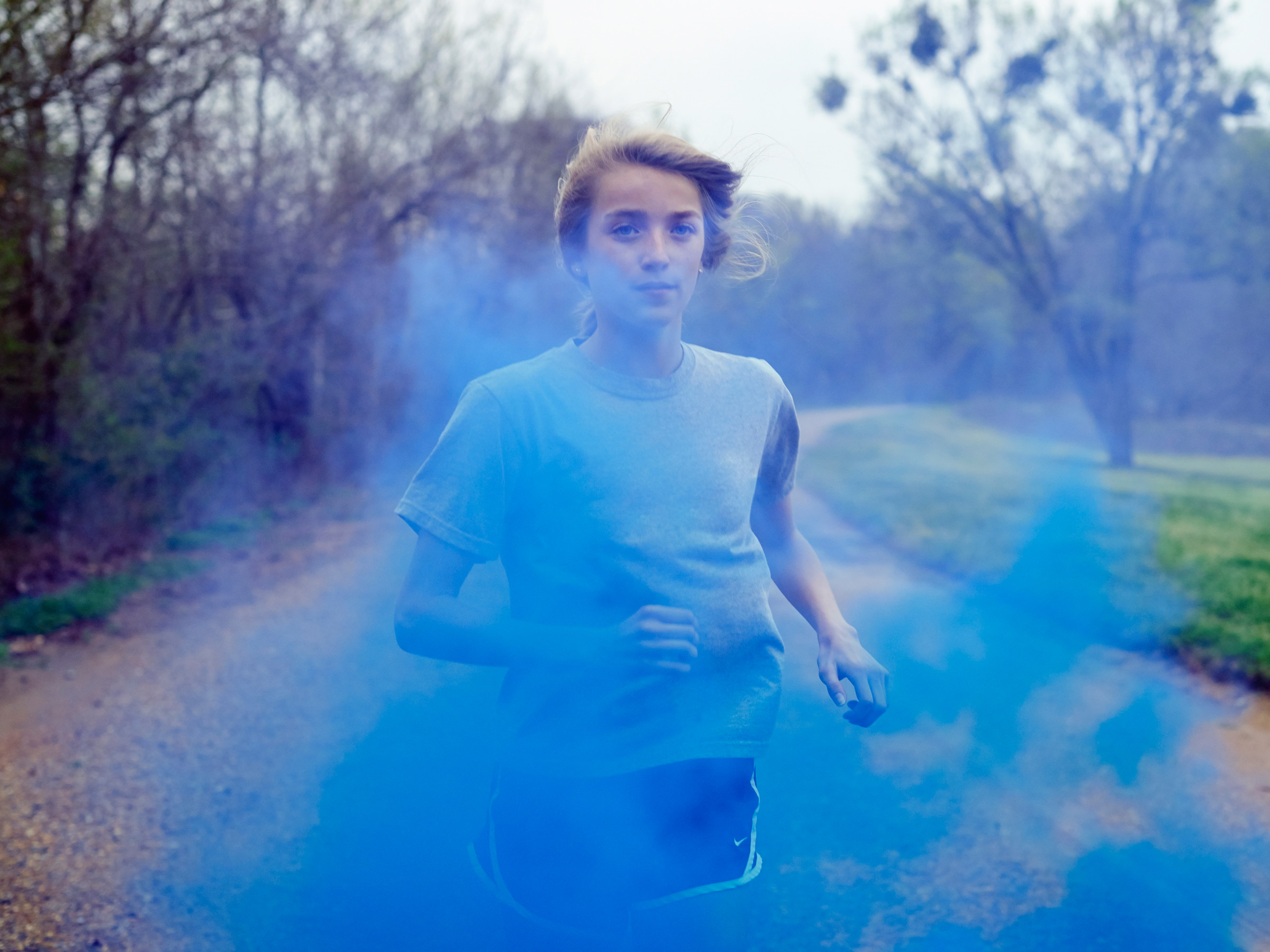
Amaris Tyynismaa has battled tourette's syndrome most of her life. Writer Duncan Murrell's profile of Amaris is a terrific example of the use of narrative to illustrate the qualities of a character.

"Amaris Tyynismaa: The Human Body is a Miracle. The Human Body is a Curse" by Duncan Murrell

Students might use the article as an example to follow when writing a brief profile of themselves.
1. Challenge the students to identify examples from the text when Murrell uses brief stories to illustrate key points about Amaris' personality or struggles.
2. Ask the students to consider how the use of the anecdotes make the story more interesting or convincing.
3. Challenge the students to share in small groups stories that illustrate something about themselves.
4. With just a partner follow up on the small group discussion with an interview focused on these ideas:

  • Identify something important / interesting people should know about your partner;
  • Discover an anecdote to illustrate the important / interesting thing;
  • Conclude your profile connecting the idea and the anecdote
Classroom friendly version of the article: A Runner


Saturday, June 6, 2015

Learning & Studying Tips

Exams are around the corner.  This article ("The Lessons You Never Got Taught In School") offers students some suggestions on how to take control of their studying success.

Best Tip: Students preparing for exams should use the "Elaborative Interrogation" method

From the article:

Elaborative Interrogation

A method involving creating explanations for why stated facts are true. The method involves concentrating on why questions rather than what questions and creating questions for yourself as you are working through a task. To do this yourself, after reading a few paragraphs of text ask yourself to explain “why does x = y?” and use your answers to form your notes. This is a good method because it is simple, so anyone can apply it easily. It does however require enough prior knowledge to enable you to generate good questions for yourself, so this method may be best for learners with experience in a subject. The technique is particularly efficient with regard to time, one study found that elaborative learning took 32 mins as opposed to 28 mins simply reading.
An example of elaborative interrogation for the above paragraph could be:
Elaborative learning is useful for proficient learners because it allows them to apply their prior knowledge effectively to process new information. It is rated as effective because it is time efficient and relatively easy to perform.

Thursday, June 4, 2015

Book Clubs with Purpose

Literature Circles with defined roles can be a useful structure to support students' understanding of the sorts of thinking that effective readers do while reading... but they can also become very formulaic and at their worst devolve into a "taking up of homework" experience as students sequentially share their work with little investment or discussion.

A Book Club approach with an open challenge to  students to demonstrate their understanding  of their text and analysis skills removes the rigid structure of the roles from the Literature Circle and can lead to more adult and interesting discussions by students, but without some focus the Book Club may stall as students may require prompting to move the discussion forward. I like this format and enjoy sitting in with students taking part in Book Clubs (or Novel Seminars) and providing the occasional nudge. I find these are rich assessment opportunities, and that the students enjoy the freedom and take up the challenge.

Lately, I've found I can give the discussions a boost -- particularly with students who are already familiar with the format, by adding a pre-meeting task to the process. By giving the group a short article or image to consider immediately prior to the Book Club / Novel Seminar meeting I can spark additional analysis and challenge the group to extend their understanding of their text further. I find this is particularly useful when a group is meeting for the second or third time as they work through their text.

This article by Hannah Gersen from The Millions website ("Thinking By A Novelist About Writing")is an example of the sort of text I like to use prime the discussion pump in an effort to deepen the Book Club discussion. I've added a few prompts at the end to frame the conversation...but I would expect the group to engage in a conversation not read prepared answers at one another.

Other articles with Book Club discussion prompts:  Novel Discussion Group Articles

Monday, June 1, 2015

Inference - Using Prior Knowldge

Coming up on exam time... students often have to tackle a sight passage. Learning to infer and use their prior knowledge effectively while reading is critical to success with an unfamiliar text. This Google Ad is a fun inference puzzle to give those inference muscles a bit of a workout.

Challenge students to build a list of everything they know or think they know about the couple in the video and the clues in the video that they used to better understand the story being told. Students could work in pairs to complete a table like this:


Next, I'd want them to Identify specific moments in the video that required them to have some prior knowledge in order to better understand the story being told through the searches. I'd ask them to explain how their prior knowledge helped them.

Here's a student worksheet that also includes connections to the classic short story "A Conversation" by Ned Guymon: Inference Worksheet.

Thursday, May 28, 2015

10 Ideas To Get Your Class Outdoors


  1. Think Walk - pose a “big idea” question for students to consider while you lead them on a 10 minute walk. 10 minutes of movement and a change of context will lead to a richer discussion and better retention. After the walk ask the students to work in triads to develop a common answer to the initial question to share with the class.
  2. Observation Challenge - lead students on a 10 minute walk outside. Notice 5-10 details while you walk. Challenge the students to pay attention to their surrounding while they walk. When you return to class pose questions based on the details observed during the walk (e.g. “How many people were sitting on the grass by the track?” / “What colour was the car parked beside the door we exited?” / “What kinds of flowers were growing in the garden we walked past?”) -- Useful activity for poetry study or narrative writing.
  3. Inside Circle / Outside Circle - move the class outside and form two concentric standing circles. The members of the inner circle face the members of the outer circle. Provide a big idea prompt to the inner circle students (e.g. - “justify your choice for the most interesting text we’ve read in class this year” / “explain which character from a text you’ve read this year would be the most interesting to meet” / “explain why a sequel should be developed for one of the texts that we’ve read this year”). Rotate the outer circle two places and repeat with the member of the outer circle speaking. Repeat a few times. Great review or consolidation activity. Alternative context helps with retention. Standing promotes focus.
  4. Character Walk - ask the students to choose one of the characters from a text they’re reading. Lead students on a short walk. Challenge the students to walk in trios and to adopt the traits of their chosen character and to have a conversation in character while they walk. Give the trios a minute to brainstorm a topic for their conversation before you leave. When you return ask the students to report on how they used word choice, body language and specific ideas to bring their characters to life.
  5. Context Circle - move the class outdoors for a circle on the grass. Set the context for the lesson or activate students' prior knowledge with a prompt (e.g. - what’s something you already know about…”). The alternate context and circle can improve focus and give all students a voice.
  6. Writing Instructions / Procedures - select a few specific destinations on the school grounds. In small groups challenge the students to develop very specific language to direct a person to their assigned destination -- with the one complication that they can only direct movement not describe the destination (e.g. - “Walk to the west end of the hallway and turn left…” NOT “If you’re standing under the goal posts you’re in the right place”). Have the groups trade instructions and see if they can successfully follow the other group's instructions.
  7. Artifact Circle - ask students to bring artifacts from home (nothing valuable) that connect to a text that has been studied in class this year. Sitting on the grass in small circles of 6-8 ask the students to pass around the artifacts and make connections to the texts read in class. The student who provided the artifact goes last to explain the connection he/she intended the artifact to represent. Challenge the students to extend their understanding by making deeper connections to their texts and speculating how characters in their texts might participate in this experience.
  8. Photo Hunt - lead students on a walk. During the walk, challenge the students to find or stage a photo that connects to a text that you’ve read / viewed in class. When you return to class jigsaw the class and have students share / explain their images.
  9. Exam Prediction Brainstorm - lead the students on a walk. While walking ask the students to brainstorm a question that “should” appear on the final exam about one of the texts being studied in class. Prior to the walk co-create the criteria that you would use to describe an appropriate exam question. After the walk jigsaw a sharing of the questions.
  10. Be Miserable - on a lousy weather day take students outside (briefly?). When you return to class ask the students to individually write a reflection or hold a whole class circle discussion about how the weather affects them. Make connections to the use of setting in a text or brainstorm ideas of how to overcome negative feelings about the weather and discuss how these strategies could have been used by a character in a text studied in class.

Sunday, May 10, 2015

Photos of Playgrounds - Inference / Research / Critical Thinking Activities

These and more stunning photos of school playgrounds from around the world can be found here: Jamesmollison.com. Additional background on the project by photographer James Mollison and his book, Playgrounds can found found in this post by Slate.com  photo blogger Jordan G. Teicher: Slate Photo Blog interview.

Affiliated Primary School of South China Normal University, Guangzhou, China

Aida Boys School, Bethlehem, West Bank

The images are a great opportunity for students to apply their inference, research or critical thinking skills.  A few ideas:

  1. Inference: examine the details of one of the images closely. What could you infer from specific elements in the photograph about the school and home lives of the students pictured?  Here's an assignment page for this activity: A Day in the Life.
  2. Research: choose one of the images to focus on and research the daily life of the life of a student in the community presented in the photo. Here's an assignment page for this activity.
  3. Critical Thinking: imagine a character from one of the texts we've studied in class emigrated to one of the communities pictured in the collection of school playgrounds. Making specific references to details in the photograph and details in the text determine how challenging or comforting the character might find his/her new community? Here's an assignment page for this activity.

Saturday, May 2, 2015

Critical Literacy - Rethinking What We Know

Globe and Mail writer, Doug Saunder’s article “The real reasons why migrants risk everything for a new life elsewhere” is a great challenging read for senior students. It addresses stereotypes, requires critical thinking about the voices not heard in most news reporting and encourages further curiosity and research.

I find students respond really well to ideas that challenge conventional wisdom. This article encourages its readers to rethink what they “know” about migrants from African nations trying to reach Europe.  This Google Docs version of the article includes some response / analysis prompts: close reading task.


Featured Post

Critical literacy lesson:

Poor Journalism: " Rise of women teachers 'turning boys off education' as report reveals girls born this year will be 75%...